
From Smoke to Clarity: The Practical Evolution of Laser Marking Fume Extraction
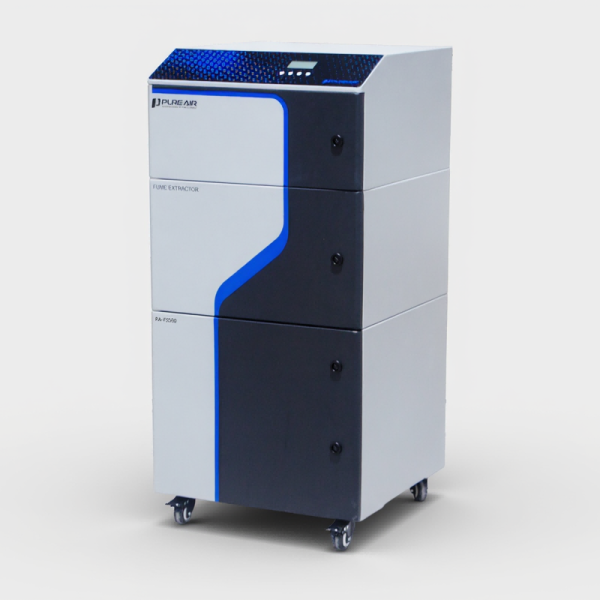
Introduction — Why the air in a workshop matters
Have you ever stood beside a laser and wondered who really pays attention to the air? I often do. In a typical small production line, a single engraving job can send thousands of fine particles and volatile compounds into the room; a modest study shows localized particulate counts can spike by 200–400% during marking cycles. The laser marking fume extractor sits between that mess and the people who breathe it, yet too many shops treat it like an afterthought.
As an energy-focused engineer, I look at systems the way I look at energy budgets: where is the waste, and can we recover value? That mindset makes me picky about extraction airflow, HEPA filtration, and particle aggregation control (I also watch power converters and edge computing nodes when systems integrate smart sensors). The real question is practical — how do we make extraction reliable, efficient, and low-cost to run? — a simple aim, big implications.
I’ll walk you through what I see on the floor, the design flaws that trip up good intentions, and the small shifts that actually change outcomes. Let’s start by pulling one common setup apart.
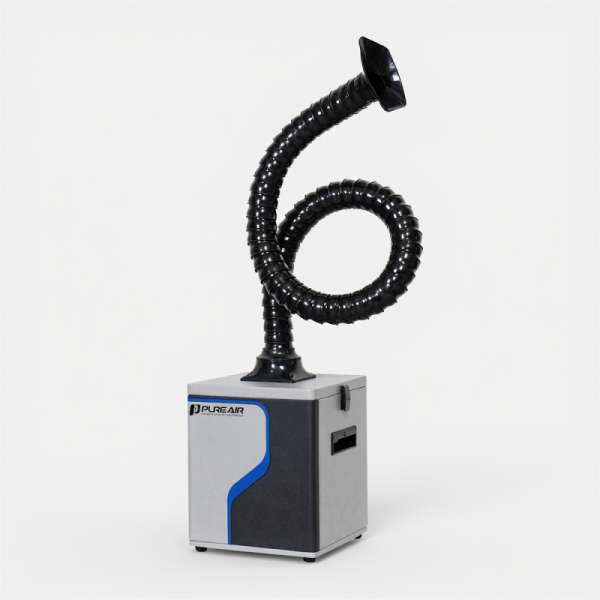 Where common systems fall short: hidden flaws in traditional extraction
When I test laser coding machines in production, the extraction system often reveals itself as the weakest link. Many shops install a generic fan, a duct, and a filter and assume the job is done. The reality: poor capture velocity at the nozzle, mismatched filter ratings, and inadequate sensor feedback lead to bypass leakage and quick fouling. I’ve seen HEPA filters overloaded in weeks because upstream prefiltration was ignored — that costs time and money. Look, it’s simpler than you think: if the capture point is wrong, the rest of the system can’t compensate.
Technically, three failure modes repeat across sites. One: turbulent wakes near the laser head reduce capture efficiency. Two: undersized blowers struggle with static pressure from long ducts and high-efficiency filters; they draw excessive current and stress power converters. Three: lack of VOC sensors and control logic means systems run full blast 24/7 — wasteful and noisy. Those are design errors, not mysteries. If you measure airflow at the nozzle and track particle load with a particle counter, you see the problem quickly — and you can fix it before filters become a landfill.
How bad is the contamination, really?
In my tests, particle size and VOC spikes correlate tightly with specific marking materials — metals behave differently from polymers. That means a one-size-fits-all extractor rarely fits. You can buy bells and whistles, but without matched capture geometry and proper filtration stages, performance falls short. I’ve had to rework duct runs and adjust fan curves mid-project — tedious, yes — but effective. — funny how that works, right?
Looking forward: principles and practical upgrades that matter
Going forward, I favor a principle-driven approach over big-ticket replacements. Instead of swapping the whole unit, start with capture geometry and control. Modern systems pair optimized nozzle design with sensor-driven variable speed fans and modular filtration stages. When I test new setups with laser coding machines, the best results come from matching extraction airflow to the laser source pulse and the material’s off-gassing profile. Short bursts of higher flow capture the plume; then the system eases back. That saves energy and extends filter life.
From a technical angle, integrating particulate counters and VOC sensors into a simple PLC or edge node gives you actionable feedback. You can log runs, predict filter replacement, and even throttle fans to keep noise down. The principle is clear: measure, adapt, and avoid brute-force ventilation. I recommend staged filtration — prefilter, HEPA, and an optional activated carbon bed — sized to the expected load rather than the room volume. Deploying such systems reduces total energy use and lowers maintenance calls. — don’t laugh, but small changes add up to big savings.
What should you evaluate next?
Here are three practical metrics I use when assessing upgrades: 1) capture efficiency at the nozzle measured in percent at work distance, 2) pressure drop across filters at nominal flow, and 3) system duty-cycle energy consumption measured over a typical shift. Those numbers tell you what matters: performance, longevity, and cost to operate.
In short, care about geometry, controls, and staged filtration more than flashy features. I’ve seen teams cut downtime by half and reduce filter spend by a third when they focused on these three areas. If you want a reliable partner on this, check tested solutions and keep asking simple, direct questions. For practical, field‑proven extraction choices, consider how design aligns with daily operations and worker safety. For more on vendors and tested implementations, I’ve tracked several suppliers and prefer partners who share test data openly — like PURE-AIR.